
What Web Summit Revealed About the Future of Data, Startups and Place
Our takeaways from a week in Lisbon
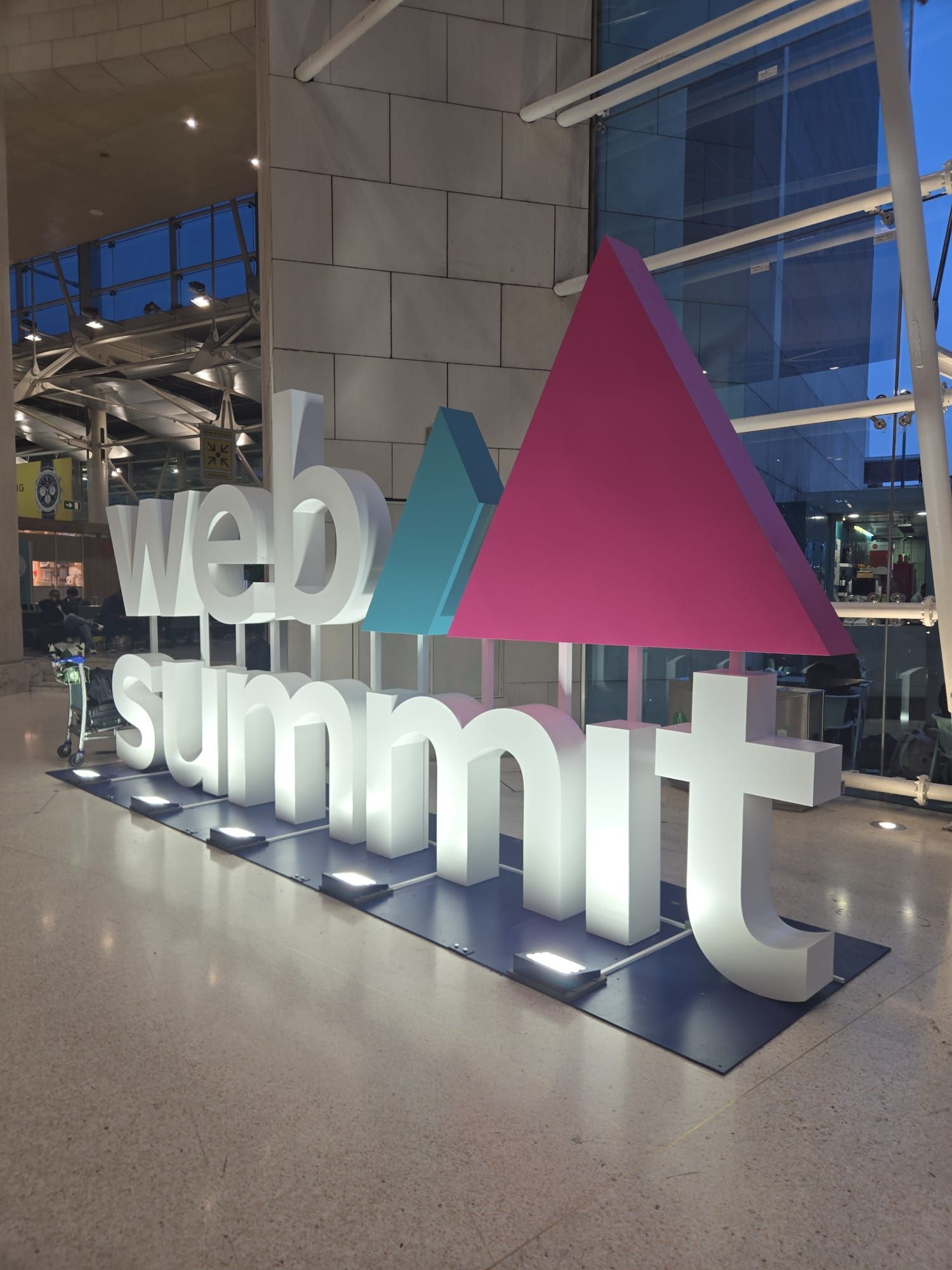
Last week we travelled to Lisbon for Web Summit, and the atmosphere was exactly what you would expect when tens of thousands of founders, operators, investors and technologists gather in one city. The energy was constant, the ambition was obvious and the sense of possibility was everywhere.
For Panolytica, it was more than another industry event. It was a chance to test our ideas in real conversations, challenge our assumptions and immerse ourselves in the discussions shaping the future of data, geography and decision making.
The conversations that mattered
The most valuable moments did not happen on the main stages. They happened in the corridors, at the stands and in the informal chats between sessions.
Across three days we met clients, prospects and fellow exhibitors from all over Europe. What stood out was not just interest in data, but a growing urgency around context. Companies are no longer short of information. They are struggling to understand it in a way that supports real decisions.
This is exactly the problem Panolytica is built to solve, and it was striking how often the same frustrations appeared.
- “We have the data, but we don’t trust it.”
- “We cannot connect location to performance in a meaningful way.”
- “Everything is siloed.”
These were not abstract complaints. They were tied to real commercial challenges. Retailers trying to understand catchment behaviour. Property teams trying to quantify demand at a hyper local level. Investors looking for an advantage beyond headline statistics.
The message was clear. Organisations that can combine data with place in a rigorous way will outperform those that cannot.
A snapshot of today’s startup culture
Web Summit remains one of the best places to see ambition concentrated in one location.
You see it in early stage founders pitching with conviction and in scale ups refining their strategy. There is a shared mindset built around moving quickly and thinking boldly. At the same time, something has matured. There is less noise, fewer gimmicks and a stronger focus on businesses that actually work. Revenue matters. Profitability matters.
AI was everywhere, but the most interesting conversations were not about AI in the abstract. They focused on application. How it improves a specific workflow, decision or outcome. That shift from hype to usefulness is where the real value begins.
The speakers and the signal
As with any large conference, the talks varied in quality. Some leaned heavily into broad predictions. Others were refreshingly practical, with founders sharing what worked, what failed and what they would change if they were starting again.
A recurring theme was resilience. Building in the current climate is challenging, and there was a welcome honesty about that. Less glamour, more reality.
It reinforced something we see every day. The companies that succeed are not only the most innovative. They are the ones that execute consistently.
Lisbon as a backdrop
Lisbon plays host exceptionally well.
You can spend the day in back to back meetings, step outside and immediately feel the pace shift. Sunlight, food and space create room for better conversations, the kind that do not happen in rushed environments.
It is also a reminder of how varied European markets are. What works in London does not automatically work in Lisbon, Berlin or Paris. This is exactly why place based intelligence matters.
What we are taking away
We left Web Summit with three clear conclusions.
1. Demand for better data is accelerating
The focus is shifting from volume to usability. Insight is what people want, not more dashboards.
2. Location remains undervalued
Many decisions are still being made without a proper understanding of geography, even with all the advances in technology.
3. Execution is the differentiator.
The gap between ideas and outcomes is where most companies fall short. The ones that close that gap with clarity and discipline are the ones that grow.
For Panolytica, the week was a chance to step back and see our place in a fast moving landscape. The answer feels clearer than ever. We help businesses make smarter decisions by connecting data to the real world.
And if Web Summit confirmed anything, it is that this challenge is not going away. It is becoming more important.